


Data confidentiality in financial auditing is both a legal and ethical obligation that protects sensitive information processed by auditors throughout their engagements. Auditors are bound by strict professional secrecy under articles 226-13 of the French Penal Code and L.821-35 of the Commercial Code. The GDPR adds a formalized contractual layer, particularly through Article 28, which mandates a data processing agreement (DPA) between the firm and its clients. The IIA and ISO 19011 professional standards reinforce this framework by making confidentiality a cornerstone of professional skepticism. In 2026, the integration of artificial intelligence into audit engagements makes mastering these requirements even more critical.
Table of Contents
- What legal obligations govern data confidentiality in financial audits?
- How do IIA and ISO 19011 standards strengthen data protection in auditing?
- What are the practical challenges of confidentiality in external audit engagements?
- What mechanisms should be implemented to guarantee financial data protection?
- My perspective on confidentiality as an audit lever
- Safe-doc: pseudonymization and compliance for financial auditors
- Frequently asked questions
- Key takeaways
- Recommended reading
What legal obligations govern data confidentiality in financial audits?
The financial auditor's professional secrecy rests on two foundational legal texts. Article 226-13 of the French Penal Code criminalizes any disclosure of confidential information. Article L.821-35 of the Commercial Code reinforces this obligation specifically for statutory auditors.
The GDPR introduces a distinct and complementary contractual obligation. The absence of a DPA compliant with Article 28 is the most frequently identified non-compliance in audit firms in 2026. This contract must clearly define who is the data controller and who is the processor-a distinction often misunderstood in practice.
Ignoring the controller/processor distinction undermines data protection. A firm that processes client data to conduct an audit acts as a processor. This classification imposes specific obligations: data security, breach notification, and assistance with data subject rights.

Legal obligations also include carefully limited exceptions. TRACFIN declarations must remain strictly confidential, with data retained for five years and a prohibition on informing the client of the filing. This legal obligation coexists with professional secrecy without contradiction.
Professional secrecy is not absolute when facing supervisory authorities. During inspection and seizure operations, a preliminary legal dialogue is recommended to organize a pre-screening of confidential documents. This procedure protects both the auditor and the client.
The main non-compliance risks include:
- Absence of DPA: the firm processes personal data without a formalized data processing agreement.
- Excessive retention: data is kept beyond legal periods without justification.
- Uncontrolled access: staff access data without formal authorization.
- Use of non-compliant tools: SaaS or AI tools are used without verifying their GDPR compliance.
Pro tip: Before any engagement, verify that your DPA explicitly covers sub-processors, particularly the audit software vendors you use. An oversight at this level exposes the firm to direct liability.
How do IIA and ISO 19011 standards strengthen data protection in auditing?
The IIA and ISO 19011 standards make confidentiality a fundamental principle, not merely a recommendation. Confidentiality is essential to enable frank and reliable sharing of sensitive information during the audit. Without confidentiality guarantees, auditees withhold information, directly compromising the quality of the auditor's work.
"Confidentiality is not a constraint imposed on the auditor. It is the condition that makes an honest and complete audit possible." This principle, embedded in the IIA standards, reminds us that data protection is as much a quality lever as a compliance obligation.
IIA standards structure confidentiality around three key principles:
1. Integrity: the auditor never discloses information obtained during the engagement to unauthorized third parties, even after the engagement ends.
2. Professional conscience: the auditor systematically evaluates the risks associated with processing sensitive data before using any tool or methodology.
3. Active confidentiality: the auditor takes concrete measures to protect data, particularly by limiting access and securing storage media.
The ISO 19011 standard complements this framework by recommending rigorous documentation of data flows during the audit. Every information transfer must be tracked and justified. This traceability protects the auditor in case of disputes and reinforces client trust.
Integrating technology into audit engagements requires heightened vigilance. Using AI in auditing requires data pseudonymization, extensive audit rights over the systems used, and transparency regarding processing metrics. These requirements align directly with the spirit of IIA and ISO 19011 standards.
What are the practical challenges of confidentiality in external audit engagements?
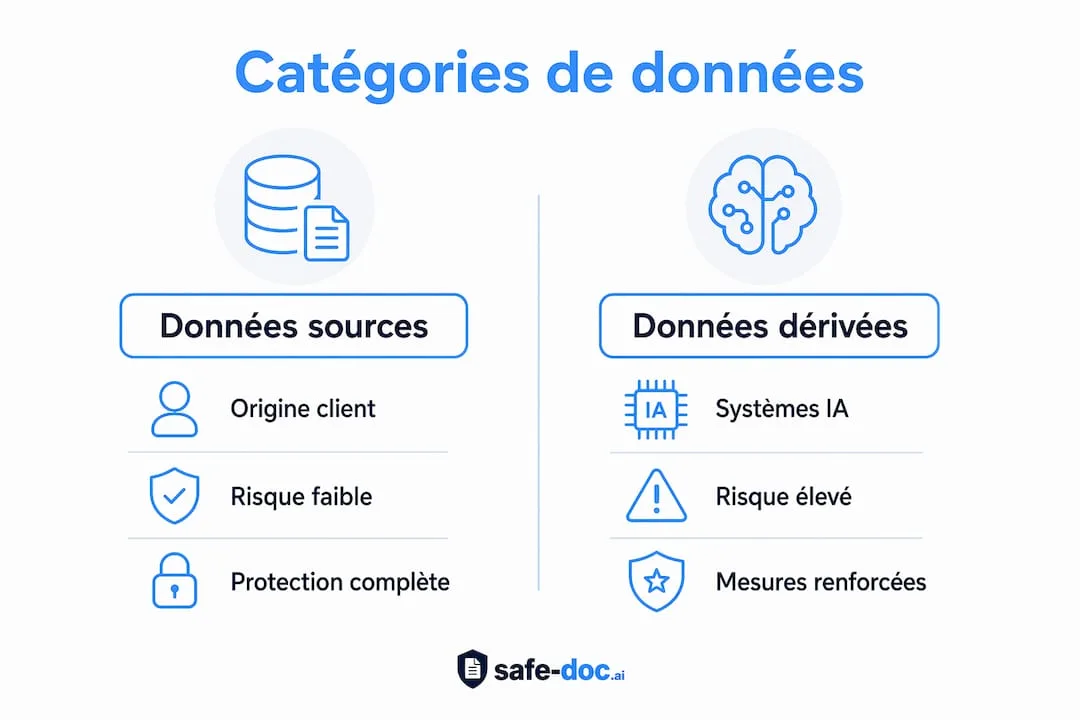
Auditors handle three categories of data with distinct legal statuses. Source data is provided by the client: financial statements, contracts, bank statements. Operational data is produced during the audit: working notes, analyses, working papers. Derived data is generated by the tools used: refined models, prompt logs, algorithm outputs.
The third category is the riskiest and least protected. Derived data produced by AI systems can become the property of the SaaS vendor if contracts do not explicitly claim it. A firm using an AI-based financial analysis tool can thus lose control over data with high intangible value.
| Data category | Origin | Primary risk | Recommended protection |
|---|---|---|---|
| Source data | Client | Unauthorized disclosure | Restricted access, encryption |
| Operational data | Auditor | Excessive retention | Formalized retention policy |
| Derived data | AI/SaaS tools | Vendor appropriation | Explicit contractual clause |
The most common confidentiality breaches in external auditing follow predictable patterns. A staff member sends a client file to an unsecured online translation service. A team uses a generative AI tool without pseudonymizing the data first. An audit report is transmitted via unencrypted email. These situations expose the firm to GDPR sanctions and loss of client trust.
Shadow AI represents a particularly difficult risk to control. Staff use unapproved AI tools to save time without measuring the consequences for financial information security. The firm remains responsible for these processing activities even if unaware of them.
Pro tip: Map the tools your audit teams actually use, including personal tools. An up-to-date processing register is the first line of defense against unintentional breaches.
What mechanisms should be implemented to guarantee financial data protection?
Contractual formalization is the essential starting point. A DPA compliant with GDPR Article 28 must include clauses on confidentiality, security, breach notification, and assistance with data subject rights. Very few firms implement this proactively, making it the primary source of non-compliance identified during inspections.
Clear segmentation of data into source, operational, and derived categories must be explicitly stated in contracts. This precision avoids disputes over ownership of data with intangible value and protects client assets. A contract that does not mention derived data leaves an exploitable gray area for tool vendors.
Organizational measures to implement cover several levels:
- Access segmentation: each staff member accesses only the data necessary for their engagement, following the principle of least privilege.
- Systematic pseudonymization: personally identifiable information (PII) is pseudonymized before any processing by external tools or AI.
- Access logging: every data consultation or transfer is recorded with user identity and timestamp.
- Retention policy: data is deleted according to a defined schedule at the end of the engagement.
- Media encryption: workstations, USB drives, and shared storage spaces are encrypted.
| Measure | Tool or method | Related standard |
|---|---|---|
| Pseudonymization | Safe-doc, masking techniques | GDPR art. 4(5), AI Act |
| Encryption | AES-256, TLS 1.3 | ISO 27001 |
| Logging | SIEM, application logs | IIA, ISO 19011 |
| Training | E-learning modules, workshops | IIA Standard 1230 |
Team training is often underestimated. An auditor who understands why pseudonymization protects their firm and their client applies procedures more rigorously than an auditor who follows rules without understanding their logic. Quarterly awareness sessions anchored in concrete examples of actual breaches produce measurable behavioral results.
My perspective on confidentiality as an audit lever
Confidentiality is often framed as a regulatory constraint to manage. My experience leads me to a different conclusion: it is a competitive advantage for firms that truly master it.
A client who knows their financial data is rigorously protected shares more information with their auditor. They flag risk areas without fearing that information will circulate. This frank sharing is precisely what professional skepticism requires to function effectively. Confidentiality creates the conditions for a deeper and more useful audit.
The arrival of AI in audit engagements changes the game on one specific point: derived data. Most auditors are unaware that logs of their queries to an AI tool can become the vendor's property. This is not a theoretical question. It is a contractual clause I have seen pass unnoticed in SaaS contracts signed by serious firms.
My most concrete advice: treat confidentiality as a standalone audit process. Map the data, formalize the contracts, pseudonymize before processing with AI. And verify that your DPA covers the tools your staff actually use, not just those you have officially approved.
- Jacques
Safe-doc: pseudonymization and compliance for financial auditors
Managing confidentiality in financial auditing requires tools adapted to GDPR and professional secrecy constraints. Safe-doc offers a sensitive data pseudonymization solution that allows audit teams to use AI tools like ChatGPT or Claude without exposing clients' confidential information.
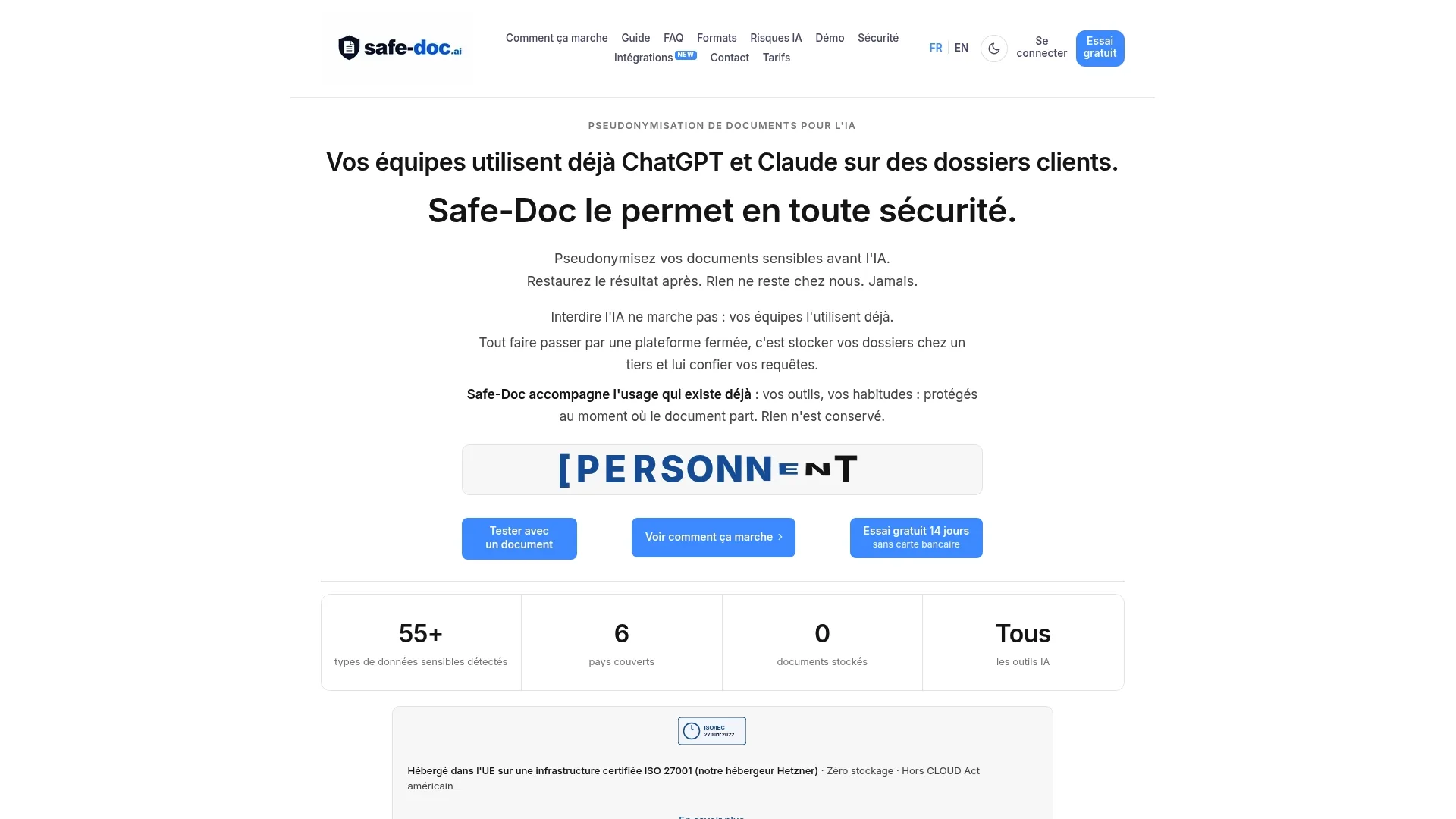
Safe-doc does not durably store processed documents and guarantees real-time processing. Personally identifiable information is masked before reaching the AI model, then restored in the final result. This architecture directly meets the requirements of GDPR Article 28 and the AI Act for high-risk systems. Audit firms processing sensitive financial data can thus maintain compliance without changing their work habits. For teams managing due diligence and data room operations, Safe-doc offers protection adapted to the volume and sensitivity of data at stake.
Frequently asked questions
What is confidentiality in an audit report?
Confidentiality in an audit report refers to the auditor's obligation not to disclose information obtained during the engagement to unauthorized third parties. This obligation is governed by Article 226-13 of the French Penal Code and IIA professional standards.
What are examples of confidentiality breaches in auditing?
The most common breaches include sending client files to unsecured online tools, using generative AI without prior pseudonymization, and transmitting reports via unencrypted email. These situations expose the firm to GDPR sanctions and loss of client trust.
What is confidentiality risk in financial auditing?
Confidentiality risk in auditing is the probability that sensitive information processed during the engagement will be disclosed, lost, or used without authorization. This risk increases with the use of non-GDPR-compliant SaaS and AI tools.
What confidentiality clauses should be included in an AI contract for auditing?
An AI contract for auditing should include clauses on ownership of derived data, prohibition of data reuse for model training, vendor audit rights, and breach notification. Explicit segmentation of source, operational, and derived data is essential to avoid disputes.
How does pseudonymization protect financial data in audits?
Pseudonymization replaces personally identifiable information with fictitious identifiers before any external processing. It reduces breach risk by making data unusable without the matching key, while allowing the auditor to work with AI tools without exposing client information.
Key takeaways
Data confidentiality in financial auditing rests on three inseparable pillars: the legal framework (Penal Code, GDPR), professional standards (IIA, ISO 19011), and formalized technical measures including pseudonymization and encryption.
| Point | Details |
|---|---|
| Fundamental legal obligation | Professional secrecy (art. 226-13 and L.821-35) and the GDPR impose strict rules on all financial auditors. |
| DPA mandatory and often absent | A data processing agreement compliant with GDPR Article 28 is the most frequent non-compliance in firms in 2026. |
| Derived data at risk | Logs and models produced by AI tools can become vendor property without an explicit contractual clause. |
| Pseudonymization before any AI processing | Masking personal data before submitting it to AI is the most effective technical measure to remain compliant. |
| Staff training is decisive | Confidentiality breaches mostly result from untrained behavior, not technical failures. |