

Data security in mergers and acquisitions encompasses all technical, legal, and organizational measures that protect sensitive information exchanged during due diligence. This process-often called "cyber due diligence" by specialized teams-directly determines target valuation and deal success. Three out of four transactions fail due to shortcomings in IT architecture, cybersecurity, or data quality. The regulatory frameworks applicable in 2026-particularly GDPR, the NIS 2 Directive, and the AI Act-strengthen the obligations of acquirers and their advisors throughout the process.
What are the main data security risks in mergers and acquisitions?
Due diligence exposes both parties to risks that legal and financial teams still too often underestimate. These risks fall into five distinct categories.
- Cyberattacks and IT vulnerabilities. The data room concentrates highly confidential information over a short period, attracting attackers. The average cost of a major cyberattack reaches €135 million for a large enterprise. This figure directly impacts price negotiations if a vulnerability is discovered before or after signing.
- Regulatory non-compliance. A target that fails to comply with GDPR or the NIS 2 Directive transfers its regulatory liabilities to the acquirer at closing. Sanctions can reach 4% of global revenue under GDPR.
- Human and organizational failures. The absence of access management policies, employee training, or incident response procedures constitutes as serious a warning signal as any technical vulnerability.
- Personal and sensitive data risks. Customer files, HR data, and financial information circulate extensively during due diligence. Uncontrolled exposure engages the liability of both parties.
- Post-acquisition risks linked to information systems integration. Rapid system interconnection creates new vulnerabilities that require an action plan within the first 100 days following closing.
The discovery of critical vulnerabilities does not automatically lead to abandonment of the transaction. Suspensive clauses and price adjustments allow for managing identified risks while maintaining the deal. This reality transforms the security audit into a negotiation tool in its own right.
How to conduct an effective acquisition security audit
An effective security audit during due diligence goes beyond simple technical inspection. The assessment integrates organizational, legal, and governance dimensions, not just IT infrastructure.
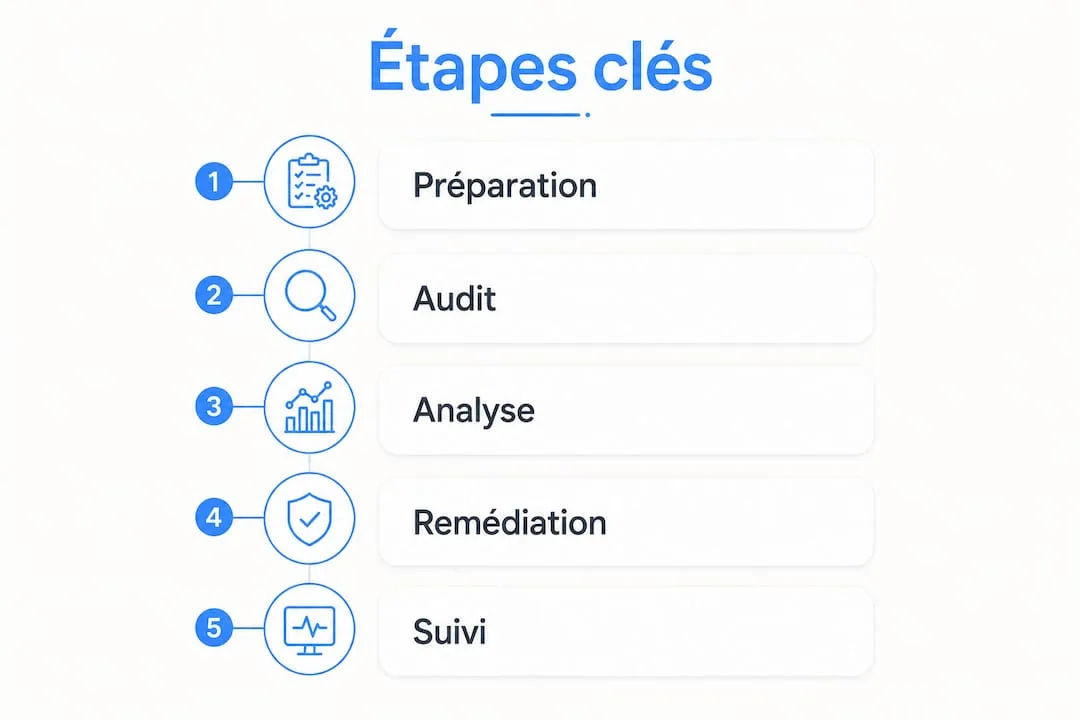
Key stages of a structured audit:
1. Declarative audit and document collection. Request that the target provide its security policies, information systems maps, IT service provider contracts, and current certifications (SOC 2, ISO 27001). This first level already reveals governance gaps.
2. Interviews with key teams. Meet with the CISO (Chief Information Security Officer), DPO (Data Protection Officer), and IT teams. The absence of an identified CISO is itself a red flag.
3. Incident history analysis. The audit must cover security incidents from the last 24-36 months, with verification of GDPR, NIS 2, and SOC 2 compliance. The absence of complete access logs or penetration test reports constitutes a major red flag that can suspend the transaction.
4. Technical tests and penetration testing (pentests). These tests evaluate the real resistance of systems against simulated attacks. They complement the declarative audit with concrete evidence.
5. Overall resilience assessment. Review business continuity plans, backup procedures, and incident recovery capabilities. A company without a documented recovery plan presents high operational risk.
Pro tip: Assemble a multidisciplinary team from the start of due diligence. An external CISO, a data protection attorney, and a financial advisor must work together. The cyber audit findings directly feed price negotiations and the drafting of representations and warranties.
Data confidentiality in financial audits follows specific rules that teams must master before accessing the data room.

What standards govern data protection in mergers and acquisitions?
Four regulatory frameworks apply directly to M&A transactions in 2026. Mastery of these frameworks determines the legal validity of due diligence and post-closing compliance.
| Regulatory framework | Primary obligation | M&A consequence |
|---|---|---|
| GDPR | Lawfulness of processing, data subject rights, data security | Liabilities transferred to the acquirer; sanctions up to 4% of global revenue |
| NIS 2 Directive | Cyber resilience of essential and important entities | Incident reporting obligation; cyber maturity assessment |
| SOC 2 | Security controls, availability, confidentiality | Certification expected for SaaS and technology targets |
| AI Act | Governance of high-risk AI systems | Additional obligations for AI tools used in data rooms |
GDPR imposes a legal basis for each processing of personal data conducted during due diligence. The legitimate interest of the acquirer may constitute this basis, but only if the data transmitted is strictly limited to evaluation needs.
A Data Protection Impact Assessment (DPIA) is mandatory for processing operations presenting high risks, particularly for certain artificial intelligence tools used in M&A. The AI Act adds supplementary obligations for AI systems classified as high risk. This directly concerns automated data room analysis platforms.
- The NIS 2 Directive expands the scope of entities subject to reinforced cybersecurity requirements. A target classified as an "essential entity" must demonstrate its compliance before closing.
- SOC 2 remains the benchmark for technology companies. The absence of a recent SOC 2 report extends audit duration and can delay the transaction.
GDPR and AI Act compliance applicable to digital tools used during due diligence deserves systematic verification before any deployment.
What are the best practices for securing data during due diligence?
Securing data during and after due diligence relies on concrete measures, not statements of intent.
Before and during due diligence:
- Pseudonymize sensitive data before any sharing. Pseudonymization replaces direct identifiers (names, contract numbers, contact details) with neutral codes. This technique reduces risk in the event of unauthorized data room access and facilitates GDPR compliance.
- Apply the principle of minimization. Only transmit data strictly necessary for the evaluation. Each shared document increases the exposure surface.
- Rigorously manage authorizations and access. Assign individual and tracked access rights in the data room. Immediately revoke access for participants who leave the process.
- Document all processing operations. Maintain an updated processing register throughout the duration of due diligence. This document is required by data protection authorities in the event of an inspection.
Pro tip: Prepare a remediation plan before signing, not after. List the vulnerabilities identified during the audit, classify them by criticality, and associate them with a correction timeline. This plan becomes a contractual document that protects the acquirer and structures the first 100 days post-closing.
After closing:
The post-closing phase is critical for security. A rapid remediation plan is essential to avoid propagation of vulnerabilities identified during the audit. Information systems integration must follow a secure sequence, with connection tests before any production release.
Management of physical and digital archives must include secure destruction of obsolete documents. This measure reduces the regulatory perimeter and limits liability linked to unnecessary data retained after the transaction.
The use of generative artificial intelligence in due diligence creates new governance challenges. Teams using unsecured AI tools to analyze confidential documents expose target data without control. Confidentiality of contracts processed by AI must be governed by a clear policy before due diligence begins.
Key points
Data security in mergers and acquisitions directly determines target valuation, legal validity of the deal, and success of post-closing integration.
| Point | Details |
|---|---|
| Quantified financial risk | A major cyberattack costs on average €135 million and directly impacts price negotiations. |
| 24-36 month audit | Incident history must cover the last two to three years to be conclusive. |
| Cumulative regulatory frameworks | GDPR, NIS 2, SOC 2, and AI Act apply simultaneously and create distinct obligations. |
| Pseudonymization before sharing | Pseudonymizing sensitive data reduces exposure risk and facilitates GDPR compliance. |
| Post-closing priority | The first 100 days after closing are the most vulnerable period for system security. |
What I observe after years of M&A operations
Cybersecurity remains the poor relation of financial and legal due diligence. Teams spend weeks auditing contracts and accounts, then allocate two days to IT audit. This imbalance is costly.
Cybersecurity has become a strategic negotiation lever, not merely a technical issue. I have seen transactions where cyber audit findings resulted in significant price reductions or specific contractual warranties. The acquirer who masters this lever negotiates better.
The other blind spot concerns the use of generative AI during due diligence. Analysts use ChatGPT or other tools to synthesize confidential documents, often without any governance policy. The use of GenAI in due diligence creates governance risks that few teams have formalized. This data passes through third-party servers, without pseudonymization, without traceability. This is a vulnerability that neither the seller nor the acquirer sees coming.
A multidisciplinary approach integrating finance, legal, IT, and risk management is the only approach that truly works. Teams that silo this expertise produce incomplete audits. Deal value is protected upstream, not by managing crises after closing.
- Jacques
Safe-doc to secure your M&A due diligence
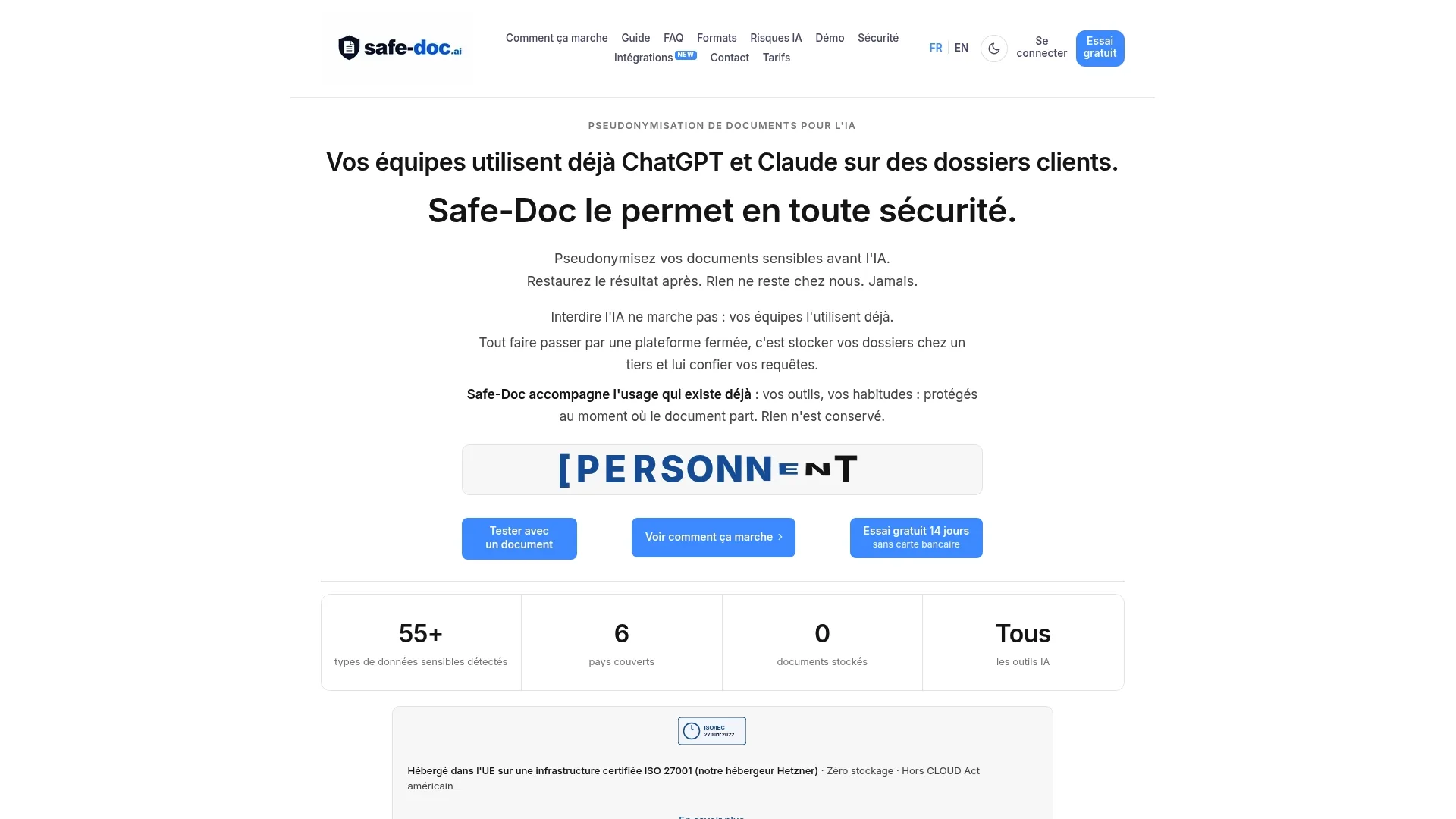
Legal and finance teams analyzing data rooms with unsupervised AI tools expose confidential data to real risks. Safe-doc solves this problem by automatically pseudonymizing sensitive documents before AI processing, without durably storing files. Personal information, financial data, and contractual clauses are masked in real time, allowing teams to continue using their usual tools while remaining compliant with GDPR and the AI Act. The Safe-doc solution for data room analysis is designed for M&A professionals who cannot afford a data leak during a transaction. DPOs and CISOs find concrete support for pseudonymization and audit compliance in Safe-doc.
Frequently asked questions
What is IT due diligence in mergers and acquisitions?
IT due diligence is the audit of a target's information systems, cybersecurity, and regulatory compliance before acquisition. It assesses technical and organizational risks that could affect valuation or deal success.
Why is data security critical in M&A?
Three out of four transactions fail due to IT or cybersecurity shortcomings. Vulnerabilities discovered after closing transfer regulatory and financial liabilities to the acquirer, with no recourse if they were not identified during due diligence.
What documents should be requested during an acquisition security audit?
Request security policies, penetration test reports from the last 24-36 months, access logs, SOC 2 or ISO 27001 certifications, the GDPR processing register, and incident reports filed with competent authorities.
Is pseudonymization sufficient to protect data during due diligence?
Pseudonymization significantly reduces the risk of personal data exposure and facilitates GDPR compliance, but it must be combined with strict access management, processing traceability, and a post-closing remediation plan to be fully effective.
When should a DPIA be conducted in the context of a merger and acquisition?
A DPIA must be conducted before deploying any processing operation presenting high risk for data subjects, particularly for AI tools used to analyze sensitive data in data rooms. The AI Act imposes additional obligations for systems classified as high risk.