

What regulations require to protect this data
Securing medical data linked to sick leave carries three immediate obligations: pseudonymization, strong authentication, and comprehensive audit trails, in line with GDPR requirements emphasized by CNIL. Furthermore, Article L.1111-8 of the Public Health Code mandates that any service provider hosting this data must hold Health Data Hosting (HDS) certification.
A frequently misunderstood point: employers may legally possess only the third section of the sick leave certificate-the part containing no medical information whatsoever. Diagnoses, treatments, and pathologies remain strictly confidential.
Practical steps to implement:
- Segregate administrative data from medical data in your systems
- Require HDS certification for any third-party provider hosting these documents
- Implement two-factor authentication for every access point
- Enable automatic logging of all access events
- Integrate Safe-doc to pseudonymize documents before any AI processing
What are the three technical pillars to master?
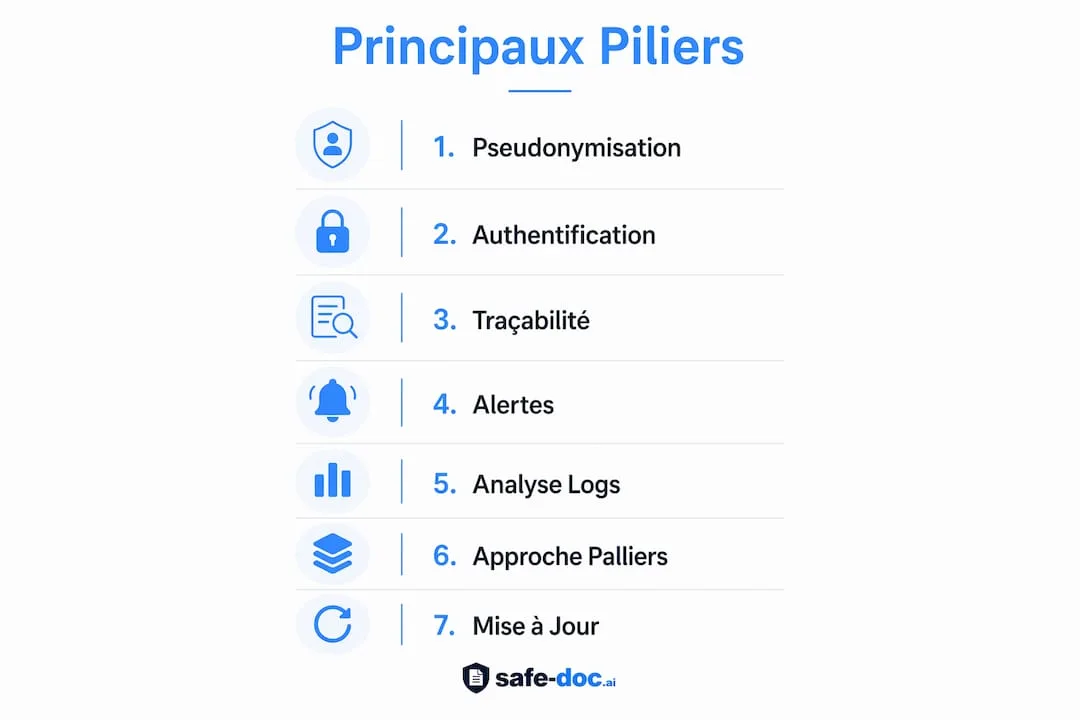
1. Pseudonymization
Systematic pseudonymization replaces direct identifiers (names, social security numbers) with irreversible alphanumeric codes. Applied before any automated processing, it drastically reduces exposure risk in the event of an incident.
2. Strong authentication
By default, strong authentication is mandatory for accessing health data. In practice, this means healthcare professional cards or two-factor devices, with no exceptions for remote access.

3. Comprehensive audit trails
Logging access alone is insufficient: CNIL requires that logs be automatically analyzed to detect anomalous consultations. The PGSSI-S framework from the Digital Health Agency structures this implementation through progressive tiers, from minimum baseline to enhanced compliance.
What an HDS-certified provider must guarantee
Entrusting health data to a third party without verifying HDS certification directly exposes you to liability. The subcontracting agreement must precisely define authorized access, and data must be encrypted both at rest and in transit, with maintenance technicians never accessing data in clear text.
- Verify HDS certification before signing any contract
- Require a data return clause with no retained copies
- Contractually define access profiles and processing purposes
- Mandate end-to-end encryption, including for maintenance operations
Best practices for compliant in-house management
Segregating administrative from medical data is your first line of defense. HR departments should access only the third section of sick leave certificates, never detailed medical information.
- Limit access rights exclusively to personnel responsible for payroll or personnel management
- Regularly train HR and IT teams on health data-specific risks
- Document every access event and every document transmission
- Establish a written incident response procedure, tested at least annually
Common errors include: transmitting sick leave via standard unencrypted email, or storing these documents in shared folders accessible to the entire department. These practices expose your organization to significant CNIL sanctions. Consult our analysis of HR data breaches for concrete examples.
Safe-doc: real-time pseudonymization for AI processing
When your teams use AI tools to process sick leave documents, the risk of data leakage is immediate if the document isn't protected beforehand. Safe-doc solves this problem by automatically pseudonymizing sensitive information before it reaches the AI engine, without durably storing the original document.
- Automatic pseudonymization of personal and medical data in real time
- Zero document storage: processing happens on the fly
- Compatibility with existing AI tools, preserving current workflows
- Built-in GDPR compliance aligned with CNIL and ANS frameworks
Pro tip: Before submitting sick leave to an AI tool, systematically verify that pseudonymization has been applied. Safe-doc does this automatically, but periodic manual spot-checks remain good audit practice.
For deeper coverage of protection techniques, consult the guide to secure processing of sensitive documents.
What risks does AI introduce into this processing?
Using unsecured AI tools to analyze sick leave creates what's known as Shadow AI: processing that occurs outside any compliance framework, often without IT management's knowledge. Data transmitted to these tools can be reused to train third-party models.
- Systematically pseudonymize before sending to any AI tool
- Encrypt data in transit and at rest per CNIL requirements
- Enable automated audit logs on every processing operation
- Provide a strictly traced and audited emergency access mode (break-glass access)
- Restrict access exclusively to tools validated by your security team
How to maintain continuous compliance over time?
1. Implement automatic alerts
CNIL requires regular automated controls to detect abnormal access. Simple logging without analysis remains insufficient to satisfy this obligation.
2. Analyze logs periodically
Automated analysis of connection logs is mandatory for effective traceability. Schedule monthly reviews and quarterly audits.
3. Adopt a tiered approach
The PGSSI-S framework offers structured progression: start at the minimum tier, then advance requirements according to your risk exposure.
4. Treat your security policy as a living document
A policy drafted once and never updated provides no protection. Revise it whenever you change tools, providers, or organizational structure.
How to secure sick leave transmission?
Transmission is the most vulnerable moment. A document sent via standard email travels in clear text across third-party servers with no confidentiality guarantee.
- Use exclusively HTTPS or VPN protocols for remote exchanges
- Encrypt data before sending via any standard messaging system
- Enable two-factor authentication for all remote access
- Prioritize secure health messaging for professional-to-professional exchanges
- Never transmit sick leave via uncertified instant messaging tools
Training your teams: an obligation, not an option
The majority of security incidents involve human error. Training HR and IT staff on health data-specific risks directly reduces this exposure.
- Organize awareness sessions at least twice yearly
- Simulate phishing attempts to test reflexes
- Distribute a clear internal policy on authorized tools for processing these documents
- Encourage incident reporting without fear of sanction
- Designate an identified security point of contact accessible to all staff
What to do in the event of a medical data breach?
1. Detect and contain immediately
The moment a breach is suspected, isolate affected systems to limit propagation. Every hour counts.
2. Analyze the incident
Identify exposed data, involved access points, and root cause before any external communication.
3. Notify CNIL within 72 hours
The obligation to notify CNIL begins upon becoming aware of the breach. Any delay beyond this deadline aggravates the regulatory situation.
4. Communicate in a controlled manner
Inform affected individuals if the risk to their rights is high, remaining factual without minimizing the incident.
5. Extract lessons learned
Document the incident, remediate identified vulnerabilities, and update your continuity plan. Formalized post-mortem analysis is the best prevention against recurrence.
Safe-doc protects your medical data without changing your tools
Your teams already use AI tools to save time processing sick leave. Safe-doc intercepts documents before they reach these tools, automatically pseudonymizing every piece of sensitive information in real time, without storing anything.
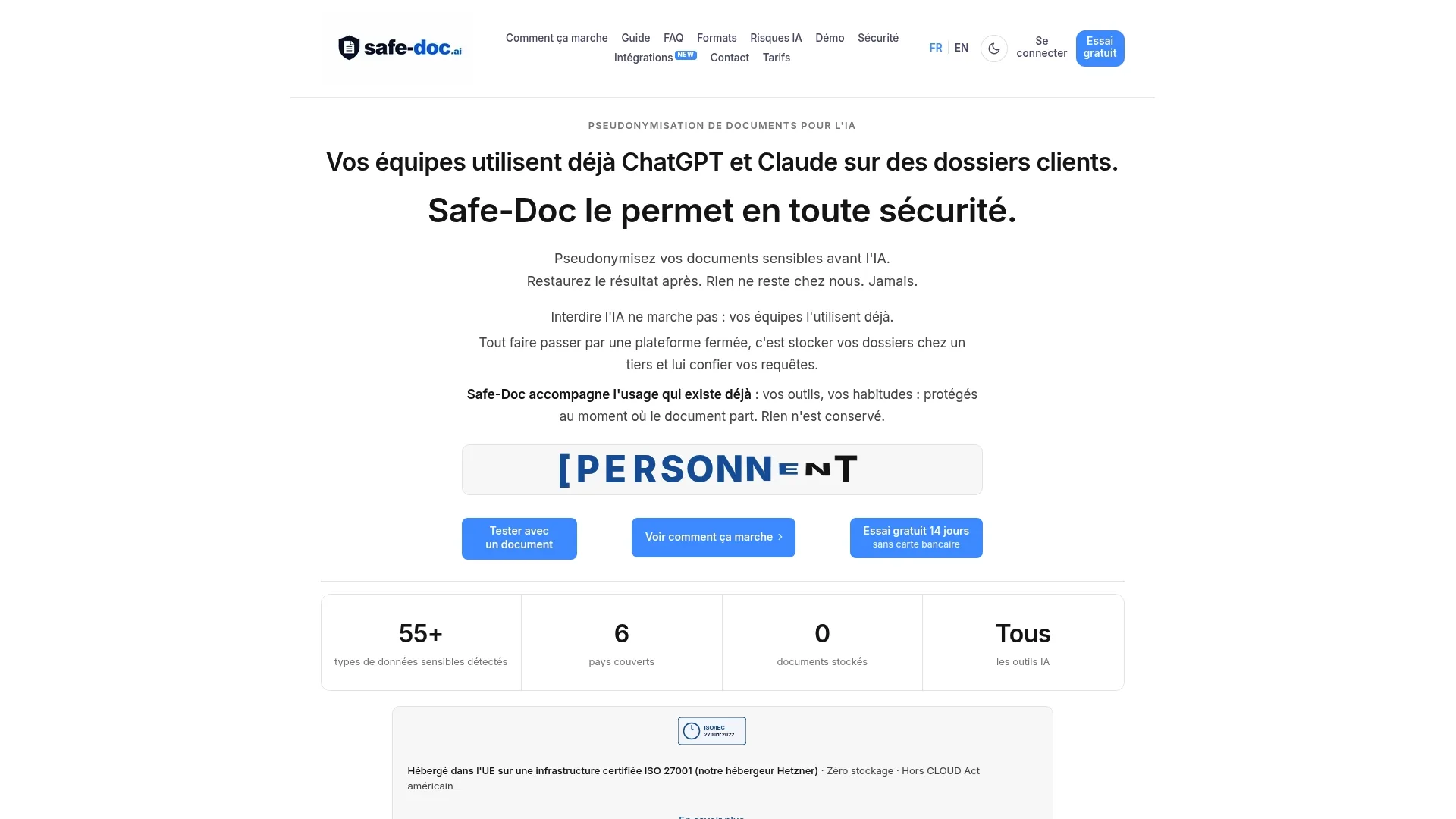
Concrete outcome: your staff continue working with their familiar tools, and GDPR compliance is ensured with every processing operation, requiring zero additional effort. For teams managing high volumes of medical documents, it's the difference between theoretical compliance and real daily protection. Discover how Safe-doc's compliant pseudonymization works and take the first step toward secure health data management.
Key points
Protecting medical data from sick leave rests on three non-negotiable obligations: pseudonymization, strong authentication, and automatically analyzed audit trails-failure risks direct employer liability.
| Point | Details |
|---|---|
| Strict legal framework | Employers may possess only the third section of sick leave, containing no medical information. |
| Three GDPR pillars | Pseudonymization, strong authentication, and traceability are mandatory per CNIL. |
| Mandatory HDS certification | Any provider hosting this data must hold certification per Article L.1111-8 CSP. |
| Shadow AI risk | Unmanaged AI tools expose medical data to undetected leaks. |
| Safe-doc in real time | Safe-doc automatically pseudonymizes documents before AI processing, with zero storage. |