


What data is actually sensitive in a consolidated report?
The answer lies in a distinction that many finance leaders overlook: not all confidential data is "sensitive" in the legal sense, and not all sensitive data deserves the same level of protection. In the context of sensitive data in consolidation reports, two regimes coexist and apply simultaneously.
The first regime is that of the GDPR, which categorizes seven types of data requiring enhanced protection: racial or ethnic origin, political opinions, trade union membership, health data, biometric data, genetic data, and sex life or sexual orientation. These categories are rarely at the heart of a consolidated financial report, but they can appear indirectly-for example, in a subsidiary's HR data or in provisions for social litigation.
The second regime, more directly relevant to consolidation teams, is that of the 2022 MEDEF/AFEP guide, which distinguishes three levels: non-sensitive data, "enterprise sensitive" data, and "sovereign sensitive" data. For a group, unpublished financial data (quarterly results before release, M&A projects, margin rates by subsidiary) typically fall into the second level. Some, when they concern companies of national strategic importance, may reach the third.
In practical terms, the categories of sensitive data found in a consolidated report cover four families:
- Financial data: unpublished results, banking risk assessments, intra-group financing structures, detailed margin rates by entity.
- Legal data: patents, distribution contracts, intellectual property rights, ongoing litigation, confidentiality agreements.
- Technical and strategic data: proprietary algorithms, operational know-how, reorganization plans, merger projects not yet disclosed.
- Sensitive personal data: employee health data, trade union membership included in social provisions.
Key takeaway: Violation of Article 9 of the GDPR exposes organizations to fines of up to €20 million or 4% of global annual turnover. The CNIL sanctioned Dedalus Biologie in 2022 for a health data breach, with one of the highest fines ever recorded. The stakes are therefore very real for any organization consolidating sensitive personal data.
The DGE emphasizes that sensitive data is characterized by three cumulative criteria: confidentiality (its disclosure harms the holder), availability (its inaccessibility also causes harm), and integrity (its alteration causes damage). For GDPR compliance in finance professionals, this triple lens is the starting point of any protection policy.

How to collect and consolidate sensitive data without creating vulnerabilities
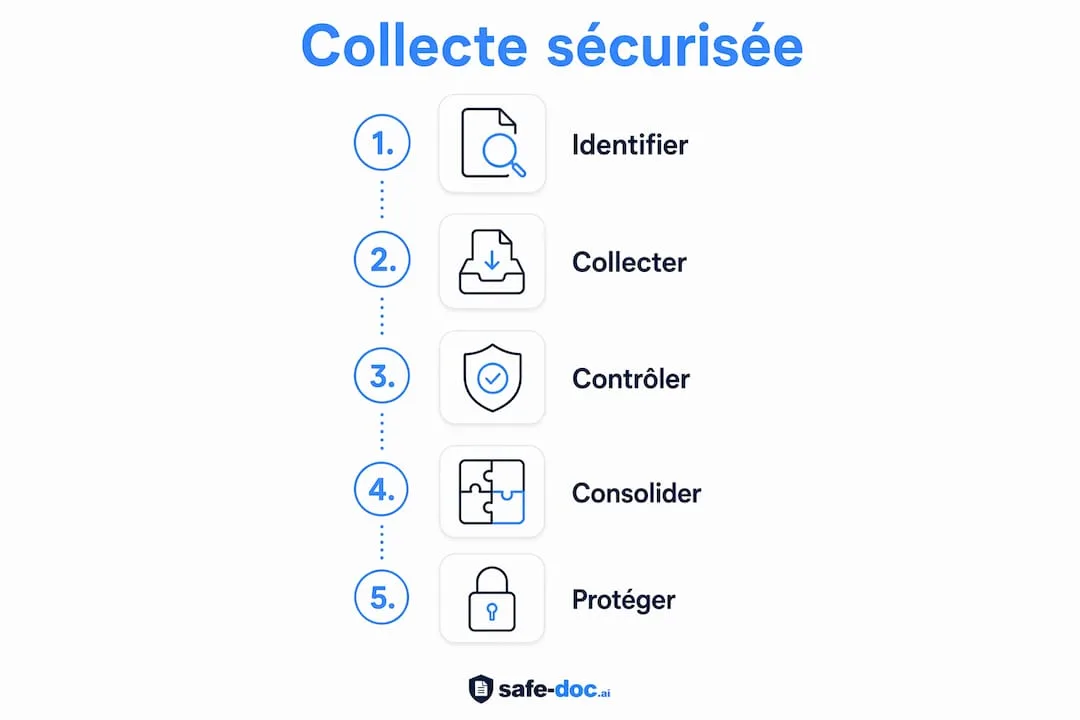
Data collection during consolidation is when risks most often materialize. Each subsidiary transmits its information according to its own habits, its own tools, sometimes in incompatible formats. The absence of a unified accounting framework creates gaps in the reliability and security of consolidated data, particularly during intra-group restatements.
A well-controlled collection process rests on several pillars:
- A documented group framework: the consolidation manual imposes common rules (depreciation periods, provisioning methods, currency conversion rules). Without it, each subsidiary interprets on its own, and restatements become a source of errors and exposure.
- Standardized reporting packages: all entities complete the same formats (balance sheet, income statement, notes, intra-group detail). Standardization enables automated consistency checks and detects anomalies before they contaminate the final report.
- A structured closing package: in the context of IFRS consolidation, each entity transmits a detailed trial balance, information on intra-group transactions, schedules of changes in fixed assets, deferred taxes, and the elements required for the notes. This package constitutes the first level of internal control.
- A strict reporting calendar: transmission dates, validation windows, and clear cut-off points for consolidation entries.
| Step | Responsible | Sensitive data involved | Control point |
|---|---|---|---|
| Collection of subsidiary packages | Subsidiary accountant or CFO | Results, margins, intercompany | Trial balance coherence and reconciliation |
| Accounting harmonization | Group consolidation team | Depreciation methods, provisions | Compliance with group framework |
| Intra-group restatements | Group management controller | Dividends, internal disposals, transfer pricing | Elimination of internal profits |
| Validation and closing | Chief Financial Officer | Entire consolidated dataset | Analytical review and approval |
| Secure distribution | CIO or compliance officer | Final report and notes | Access control and traceability |
Gap management deserves particular attention. Any significant restatement (goodwill, impairment, reclassification) must be documented to ensure consistency from one year to the next and to facilitate the auditor's work. An undocumented restatement is orphaned sensitive data: no one knows why it exists, and no one can ensure its protection.
Pro tip: Establish a data mapping register at the start of the consolidation cycle. Identify for each information flow: the source, the responsible person, the sensitivity level, and the transmission channel. This register becomes your first line of defense in the event of an audit.
What governance practices actually protect your consolidated data?
Governance of sensitive data in consolidation is not just a password policy. It assumes an architecture of clear responsibilities, applied classification rules, and control mechanisms that function even under closing deadlines.

Risk-level classification is the starting point. Differentiating critical strategic data from utility data allows you to tailor protection without creating paralyzing bureaucracy. Classifying almost all data as "highly confidential" is counterproductive: truly sensitive information ends up being protected the same way as a dashboard accessible to everyone, which empties the classification of meaning.
The four fundamental protections of secure financial reporting are encryption, access control, audit logging, and consultation traceability. The golden rule remains access minimization: do not share "just in case," share "on a need-to-know basis." This discipline changes internal culture far more effectively than a memo.
Among the practices to implement:
- Documented authorization policy: define who has access to what, with periodic rights reviews, especially during position or scope changes.
- Protection of metadata and intermediate files: analytical comments, working versions, and restatement files are often as revealing as the final report. Unprotected local copies represent a high risk outside a centralized system.
- Systematic confidentiality agreements: according to the FIM guide, a confidentiality agreement must be signed before any exchange involving sensitive data, specifying the scope, duration, exclusions, and authorized persons.
- Centralization before distribution: centralization avoids competing versions and divergent figures. It makes each number explainable, line by line.
Pro tip: Apply proportional protection: Level 1 data (sovereign sensitive) requires end-to-end encryption and traced named access. Level 2 data (enterprise sensitive) can tolerate role-based group access, provided the audit log is active. Do not treat everything with the same intensity-you will exhaust your teams without gaining real security.
How to integrate CSR and ESG data into your consolidated reports
Extra-financial data occupy an increasingly important place in consolidated reports, and their sensitive nature is often underestimated. CSR and ESG indicators can reveal competitive positions, unprovisioned environmental risks, or internal social tensions. Their integration into the consolidation process therefore calls for the same precautions as financial data.
Regulatory requirements around CSR are evolving rapidly in France and Europe. The CSRD directive requires large companies to provide detailed, auditable extra-financial reporting integrated into annual financial statements. The data concerned covers greenhouse gas emissions, energy consumption, social indicators (accident rates, gender parity, training), and governance data.
To integrate this data into consolidation, several steps are essential:
- Define harmonized indicators across the entire consolidated scope: each subsidiary must measure the same indicators with the same calculation methods; otherwise, consolidation produces non-comparable aggregates.
- Ensure data quality and traceability at source: unlike accounting data, ESG data often comes from heterogeneous systems (HR, production, procurement). A structured collection process with validation points is indispensable.
- Secure sensitive ESG data through specific processes: certain indicators (ongoing environmental litigation, occupational health data, social audit results) fall into sensitive categories under the GDPR or trade secrecy.
- Provide an audit trail: statutory auditors and independent third-party organizations (OTIs) certifying the sustainability report require full data traceability.
Frequently asked questions about CSR/ESG integration in consolidation:
Should ESG data be treated as sensitive data? Yes, as soon as it reveals non-public information about strategy, risks, or the company's social situation. Occupational health data is further protected by Article 9 of the GDPR.
Is a separate ESG framework needed from the accounting framework? In practice, groups that successfully integrate ESG create a common framework that aligns definitions, scopes, and reporting calendars for both types of data.
What are the main risks when processing CSR/ESG data? Double-counting of indicators between subsidiaries, premature disclosure of sensitive data during collection phases, and lack of traceability that makes certification impossible.
Safe-doc protects your sensitive data during consolidation with AI
The fastest-growing risk in finance teams is not external hacking. It is the uncontrolled use of artificial intelligence tools to analyze, summarize, or reprocess consolidated reports containing sensitive data. An analyst who pastes a closing package into ChatGPT to extract key points in five minutes potentially exposes unpublished results, margin rates by subsidiary, or employee personal data.
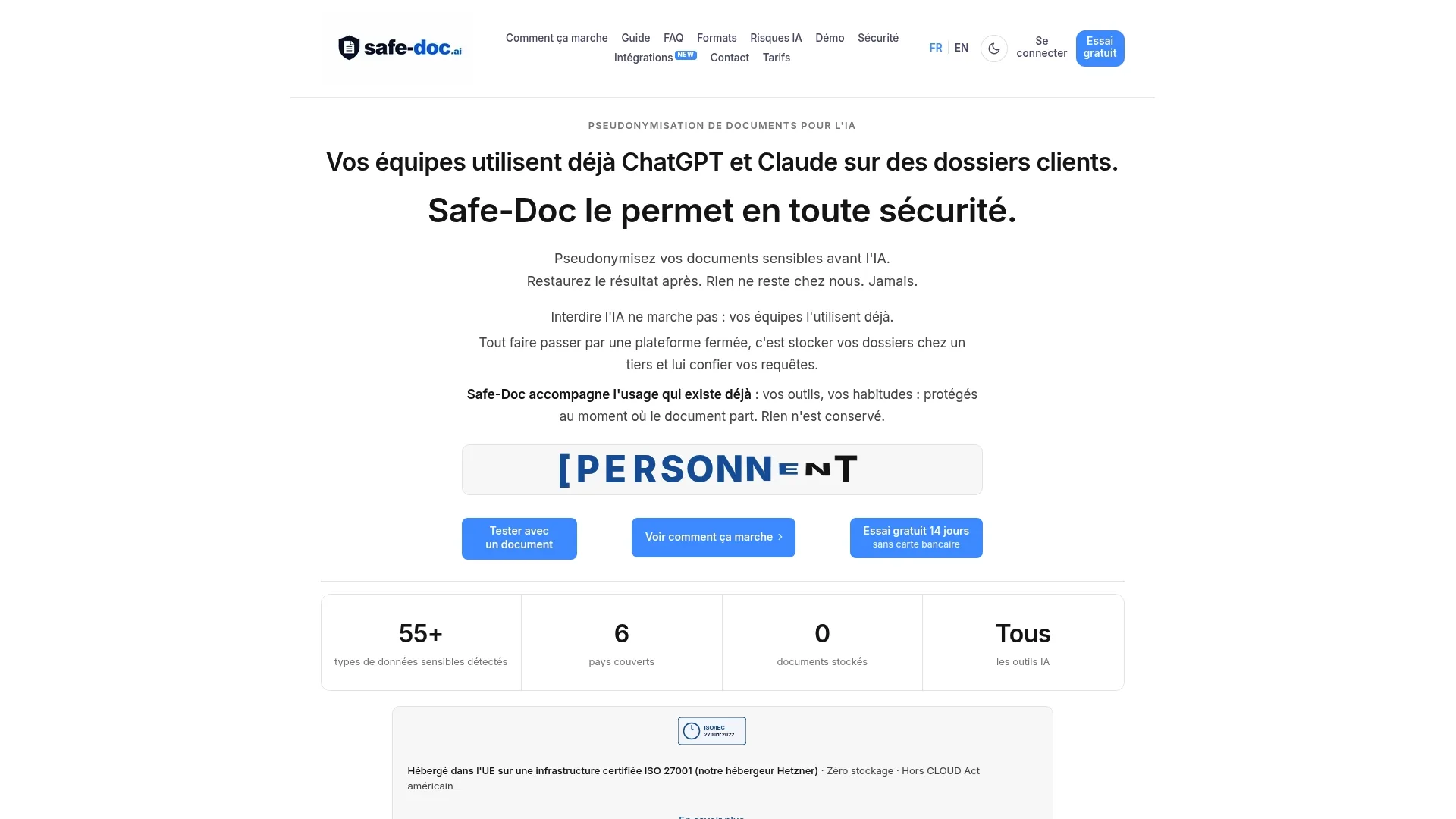
Safe-doc addresses precisely this problem. The platform offers real-time pseudonymization without document storage: sensitive data is replaced by neutral identifiers before being transmitted to the AI tool, then restored to its original form once processing is complete. The document never transits in the clear to a third-party server.
The benefits for consolidation teams are direct:
- GDPR compliance maintained: pseudonymization within the meaning of Article 4(5) of the GDPR reduces the risk associated with third-party processing, without blocking existing workflows.
- Zero storage: Safe-doc does not retain any copies of processed documents, eliminating the risk of leaks via the provider's servers.
- Compatibility with existing tools: teams continue to use ChatGPT, Claude, or other AI assistants, with a transparent layer of protection.
- Auditability: every pseudonymization operation is traceable, meeting the logging requirements imposed by the GDPR and best practices for confidentiality in financial audit.
- Reduced exposure surface: unpublished financial data, margin rates, and sensitive legal information never leave the organization's secure perimeter.
Pro tip: Before deploying an AI tool on your consolidated reports, map the data categories present in each document type. An IFRS closing package contains Level 1 data (unpublished results) and Level 2 data (proprietary accounting methods). Safe-doc allows you to [pseudonymize confidential accounting data](https://safe-doc.ai/blog/pseudonymiser-donnees-comptables-confidentielles-guide-2026.html) before any AI processing, without changing your organization.
Data protection officers (DPOs) and chief financial officers seeking to govern AI use in their consolidation processes will find in the Safe-doc compliance solution a ready-to-use operational framework aligned with GDPR and audit requirements.
Key points
Protecting sensitive data in consolidated reports relies on rigorous classification, documented governance, and tools adapted to the AI era.
| Point | Details |
|---|---|
| Two distinct legal regimes | The GDPR governs sensitive personal data; the 2022 MEDEF/AFEP guide covers strategic and financial enterprise data. |
| Proportional classification | Differentiating critical data from utility data avoids paralyzing overprotection and focuses efforts where risk is real. |
| Structured collection and unified framework | A consolidation manual and standardized packages reduce gaps during intra-group restatements. |
| Four fundamental protections | Encryption, access control, audit logging, and traceability form the foundation of secure consolidated reporting. |
| Pseudonymization before AI processing | Safe-doc protects sensitive data in real time without storage, maintaining GDPR compliance when using AI tools. |
AI in consolidation: what finance teams still underestimate
Most articles on securing data in consolidation stop at classic best practices: encryption, access control, audit logging. These measures remain necessary, but they were designed for a world where sensitive data remained in closed systems. Generative AI has changed the landscape structurally, and finance teams have not yet fully integrated this shift.
The real risk in 2026 is not the hacking of a consolidation server. It is the analyst who, under closing pressure, pastes an 80-page report into an AI assistant to extract the key points in five minutes. This gesture, repeated dozens of times per week in groups without a clear policy, constitutes systematic exposure of unpublished financial data to third parties.
Yet regulation does not wait. Violation of Article 9 of the GDPR exposes organizations to sanctions that can reach 4% of global annual turnover. And beyond sanctions, premature disclosure of consolidated results can trigger investigations by the Financial Markets Authority for listed groups.
The answer is not to ban AI from finance teams. This approach is doomed to fail: the tools are too useful, too accessible, and prohibition simply pushes usage into the shadows. The answer is to govern usage through a technical protection layer, such as pseudonymization, that allows teams to work with the tools they know while maintaining data confidentiality.
Information governance in consolidation must evolve in this direction: fewer declarative rules, more technical mechanisms that make good behavior natural. Organizations that succeed not only reduce their legal risk. They also gain reliability and closing speed, because their processes are documented, traceable, and repeatable.